Start With the Process Requirement
Industrial water filtration selection should begin with the process requirement, not with a product name. Engineers and procurement teams often receive a request such as cartridge filter, dosing pump, RO membrane, pressure vessel, or media filter, but that label is only the starting point. The correct component depends on raw water quality, target outlet quality, operating pressure, flow rate, duty hours, temperature, chemical exposure, cleaning method, space availability, and maintenance access.
For a consultant or plant engineer, the first question is what the component must protect or achieve. A cartridge filter may be protecting RO membranes from suspended solids. An antiscalant dosing pump may be protecting a membrane system from scale. A pressure vessel may need to handle a specific media bed, backwash flow, and valve arrangement. When the purpose is clear, the shortlist becomes more accurate and the quotation becomes easier to compare.
Define the water quality target
Record feed water data, expected treated water quality, turbidity, TDS, hardness, pH, iron, organics, chlorine, and any process-specific contaminants before choosing the component.
Identify the operating duty
Continuous duty, batch operation, standby service, high recovery RO, utility water, drinking water, and process water each create different selection priorities.
Compare Hydraulic and Chemical Conditions
Hydraulic conditions decide whether a product will fit the system without creating pressure loss, unstable flow, or service problems. For filters and housings, check design flow, peak flow, pressure rating, connection size, allowable pressure drop, and service access. For pumps, confirm flow rate, head, suction condition, chemical compatibility, control method, and power availability. For RO membranes, review feed pressure, recovery target, fouling risk, cleaning frequency, and feed water chemistry.
Chemical conditions are equally important. Materials used in vessels, seals, cartridges, membranes, pump heads, valves, and tubing must be suitable for the liquid they handle. A dosing pump used for acid, alkali, chlorine, antiscalant, or coagulant must be selected with compatible wetted parts. A filter media bed must be selected based on the contaminant load, backwash capacity, and expected service cycle. Ignoring chemical compatibility can create leakage, performance loss, or premature replacement.
Review Core Component Families
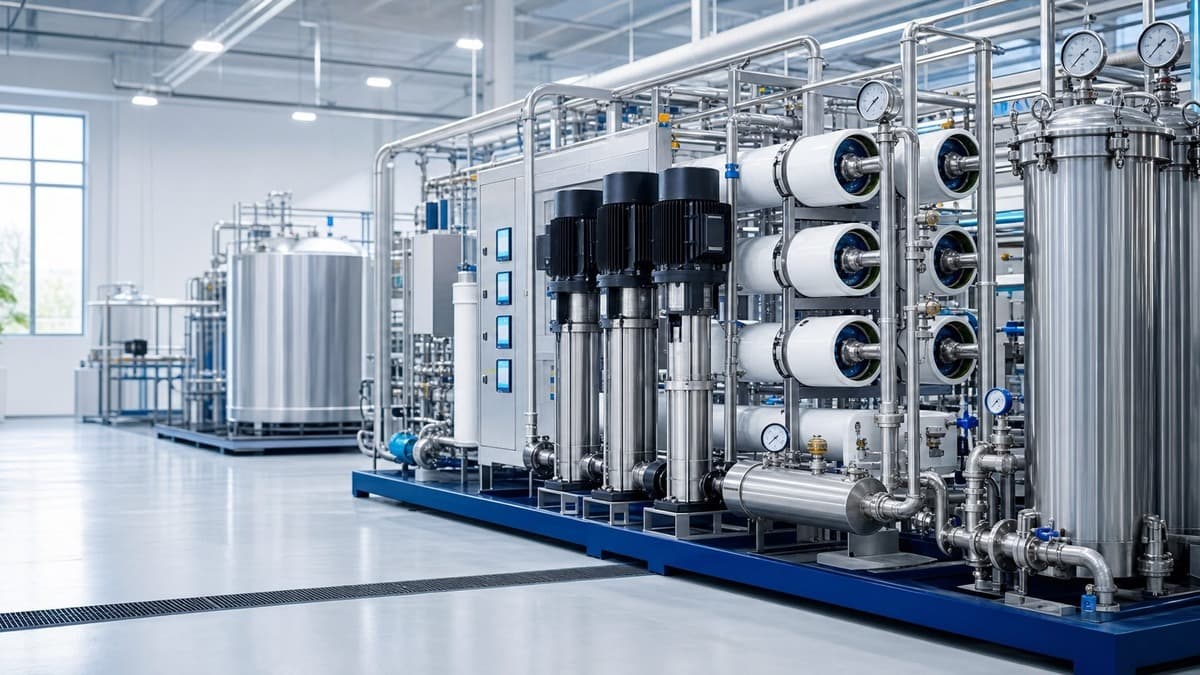
A practical industrial shortlist usually covers multiple product families. RO membranes are selected for salt rejection, recovery, fouling behavior, and feed water conditions. Pressure vessels and RO housings are selected for membrane size, pressure class, port arrangement, and serviceability. Dosing pumps are selected for chemical type, dosing rate, discharge pressure, turndown, and automation needs. Filter cartridges are selected for micron rating, length, diameter, material, and dirt-holding capacity.
Filter media and FRP vessels require a combined view. The vessel must have the correct diameter, height, pressure rating, internal distribution, and valve compatibility for the selected media. Multiport valves and distribution systems affect service, backwash, rinse, regeneration, and flow uniformity. Instruments and RO controllers help operators monitor conductivity, pressure, flow, tank level, and protection interlocks. Each component should be reviewed as part of the treatment system, not as an isolated item.
Products commonly reviewed together
RO membranes, RO housings, FRP vessels, dosing pumps, cartridges, filter media, multiport valves, antiscalant, level sensors, and instruments are often evaluated in the same procurement cycle.
Prepare a Clean Procurement Comparison
Procurement teams need more than a price line. A useful comparison should include product description, model or size, material of construction, pressure rating, flow range, operating temperature, connection details, compatible accessories, document availability, delivery requirement, and warranty information where applicable. If values are not available, they should be marked as pending rather than guessed. This keeps the technical and commercial comparison honest.
A structured enquiry reduces delays. Attach available water analysis, process flow, existing product photographs, previous model numbers, drawings, preferred brands, quantity, timeline, and site location. This information helps the supplier recommend a suitable product and helps the buyer compare alternatives with fewer clarification rounds. For repeat purchase requirements, include the exact replacement size, connection, and operating history if available.
Final Selection Checklist
Before issuing a purchase order, engineers should verify that the selected component matches the application, hydraulic duty, material compatibility, installation space, maintenance method, and documentation requirement. Procurement should check whether the quotation clearly identifies what is included and what is excluded. Consultants should confirm whether the product can meet the project specification and whether any approval documents are required.
ICONIC FILTRATION AND ENGINEERS LLP supports industrial buyers, OEMs, consultants, and water treatment companies with product shortlisting and quotation support. A clear enquiry with technical inputs helps the team respond with practical options for water filtration products and engineering-led water treatment solutions.
The strongest purchase decisions usually come from a shared technical checklist. When the engineering team, purchase team, and supplier review the same application data, the discussion becomes more objective. This reduces assumptions, improves quotation quality, and helps the buyer avoid selecting a product that appears economical but creates operating, compatibility, or maintenance problems later.