Why RO Membrane Selection Matters
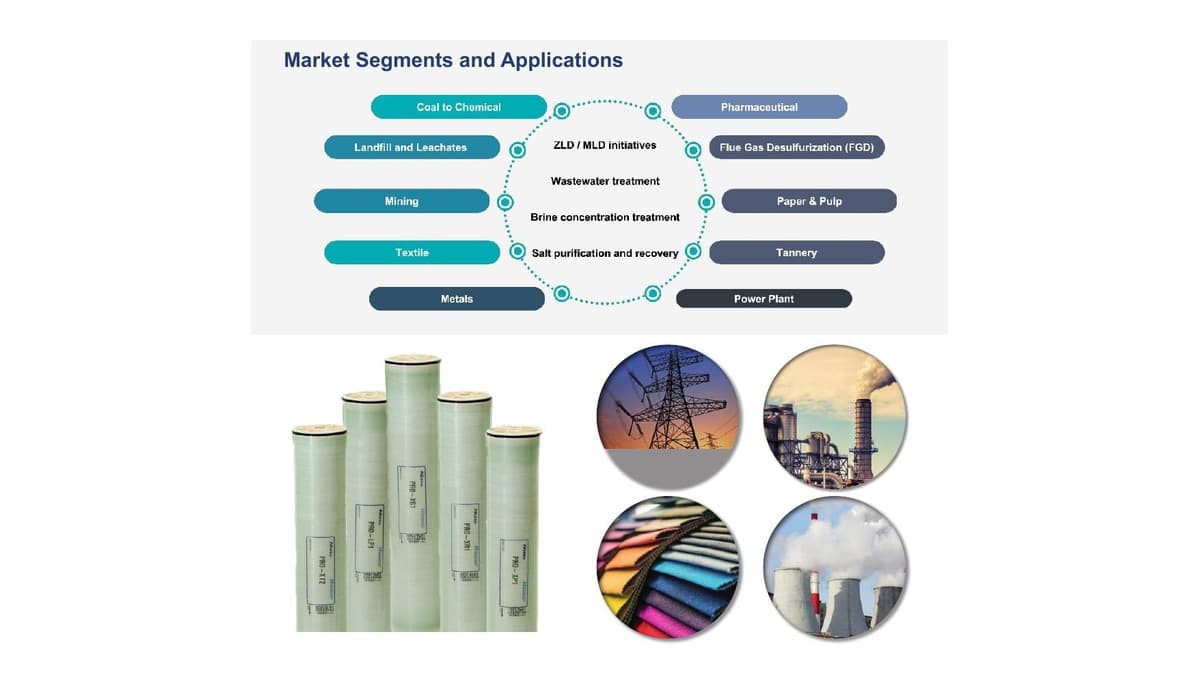
RO membranes are a core component in industrial water treatment systems because they directly influence treated water quality, recovery, operating pressure, cleaning frequency, and long-term operating cost. A membrane that looks correct by size alone may still be unsuitable if the feed water chemistry, fouling tendency, temperature, pressure, or required permeate quality is not reviewed. For industrial buyers, membrane selection should therefore be treated as an engineering decision, not only a consumable purchase.
The first step is to identify the water source and treatment objective. Borewell water, municipal water, brackish water, seawater, process water, wastewater reuse, and boiler feed applications can require different membrane families. The target may be TDS reduction, process water quality, high purity water, reuse, recovery improvement, or equipment protection. Each target changes the selection inputs and the questions that should be asked before quotation.
Feed Water Data Required Before Selection
A reliable RO membrane recommendation depends on water analysis. Important values include TDS, hardness, alkalinity, silica, iron, manganese, turbidity, SDI, TOC where relevant, pH, temperature, free chlorine, and any known organic or biological loading. These values help assess scaling risk, fouling potential, chemical compatibility, and pretreatment requirements. If the feed water data is incomplete, the recommendation should remain provisional until verified information is available.
Pretreatment must also be reviewed. Cartridge filtration, media filtration, carbon filtration, softening, antiscalant dosing, pH correction, dechlorination, and ultrafiltration may all affect membrane performance. A membrane should not be expected to solve problems that belong in pretreatment. Engineers should check whether the pretreatment system can control suspended solids, oxidants, hardness, and organics before the water reaches the RO stage.
Compare Membrane Performance Parameters
Common membrane comparison points include membrane size, membrane type, salt rejection, permeate flow, test pressure, recovery range, operating pH range, cleaning pH range, temperature limit, feed spacer design, and fouling resistance. These values should be taken from approved manufacturer datasheets, not assumed. Procurement teams should avoid comparing membranes only by price if the models differ in rejection, pressure requirement, application range, or fouling behavior.
Operating pressure is especially important. A lower energy membrane may reduce pressure requirement in suitable conditions, while a high rejection membrane may be selected where permeate quality is critical. Low fouling membrane options may be considered for waters with organic or biological fouling potential, but they still require correct pretreatment and cleaning practices. The best selection balances water quality, energy use, recovery, fouling control, and service expectations.
Recovery and scaling risk
Higher recovery can reduce reject volume, but it also increases scaling risk. Recovery should be checked against feed chemistry and antiscalant strategy.
Cleaning and maintenance
Cleaning frequency depends on feed quality, pretreatment, operating flux, differential pressure trends, and plant discipline.
Procurement Documentation for RO Membranes
Industrial membrane purchases should be supported by clear documentation. Buyers may need datasheets, model references, membrane dimensions, operating limits, storage guidance, installation instructions, and compatibility notes. If a membrane is being purchased as a replacement, the old model number, plant capacity, pressure vessel size, number of elements, and operating history should be shared. This helps avoid selecting a membrane that fits physically but is not appropriate for the process target.
Consultants and plant engineers should also check whether the membrane matches the plant design assumptions. Important questions include number of stages, element count per pressure vessel, feed pressure, flux, recovery, cleaning arrangement, reject handling, and instrument availability. Procurement teams should confirm delivery, packing condition, storage expectations, and whether any catalogue or datasheet references are included with the offer.
How ICONIC Supports RO Buyers
ICONIC FILTRATION AND ENGINEERS LLP supplies RO membranes and related water filtration products for industrial, commercial, and water treatment applications. The team can review product interest, application, feed water information, capacity, preferred brand, and project timeline before preparing a quotation. Where exact technical data is required, approved catalogues and datasheets should be used for final engineering confirmation.
For the fastest response, send feed water analysis, target treated water quality, plant capacity, existing membrane model, number of membranes, pressure vessel details, operating pressure, recovery target, and location. This information helps ICONIC support engineers, procurement teams, OEMs, and consultants with suitable membrane options and connected products such as RO housings, antiscalant, cartridges, pumps, and instruments.
A membrane enquiry should also mention whether the requirement is for a new plant, replacement, capacity expansion, troubleshooting, or cost optimization. These situations may lead to different questions. Replacement buyers may need dimensional and compatibility confirmation, while new projects may require broader review of pretreatment, recovery, pressure vessel arrangement, and product documentation for consultant approval.
Procurement teams can make the review smoother by separating mandatory requirements from preferences. Required values may include membrane size, pressure vessel compatibility, target permeate quality, and delivery timeline. Preferences may include brand family, energy profile, or documentation format. This distinction helps the supplier respond without hiding important technical limitations.